Europe’s Newest UNESCO Treasures
Seven New Reasons to Explore the Continent
Once a year, UNESCO opens its World Heritage List to a handful of places deemed so exceptional that they belong, quite simply, to humanity. This July, seven such places joined the roll call from across Europe — a modernist Baltic port, a mountain of myth, a chain of medieval fortresses, a coastline that changed the course of history, and more. France leads the way with two new inscriptions, but each of these seven sites, from Finland’s forests to the fossil cliffs of Denmark, offers something entirely different for the traveller who seeks not just beauty, but meaning. Here is our considered introduction to Europe’s newest UNESCO treasures — and where to lay your head while you discover them.

🇫🇷 D-Day Beaches, Normandy, France
There are landscapes that are beautiful, and there are landscapes that are sacred, and every so often, in Normandy, they are the same stretch of sand. Along eighty kilometres of coastline — Utah, Omaha, Gold, Juno and Sword — and the shattered cliffs of Pointe du Hoc, more than 150,000 Allied troops came ashore on the sixth of June, 1944, in the operation that turned the tide of the Second World War. UNESCO’s inscription recognises not a single monument but an entire living landscape: bomb-scarred bluffs, rusting bunkers, sunken vessels and the artificial harbours built to sustain an invasion, all held in careful balance with the gentle Norman countryside that has grown up quietly around them. To stand at dawn on Omaha Beach, or beneath the ragged craters of Pointe du Hoc, is to feel history not as a story told, but as ground still bearing witness.
Where to Stay: Château La Cheneviere, a serene five-star manor between Bayeux and the beaches, offers gracious Norman hospitality within easy reach of every landing site.

🇫🇷 Royal Capetian Fortresses of Languedoc, France
High above the vineyards and garrigue of southern France, eight fortresses still keep their watch — Carcassonne’s great walled city chief among them, alongside the wilder, wind-scoured ruins of Peyrepertuse, Quéribus, Montsegur, Puilaurens, Termes, Lastours and Aguilar. Raised by the Capetian kings in the wake of the Albigensian Crusade, these strongholds tell the story of a medieval monarchy imposing its will on a defiant southern land, one dramatic clifftop at a time. What UNESCO has honoured is the system as a whole — a chain of ostentatious power dressed as architecture, each fortress chosen for a peak or ridge so improbable that the building itself becomes a kind of theatre. Few driving routes in Europe deliver such a sequence of jaw-dropping silhouettes against the Mediterranean sky.
Where to Stay: The storied Hôtel de la Cité, a former bishop’s palace set within Carcassonne’s own ramparts, offers the rare privilege of sleeping inside a World Heritage fortress.

🇮🇹 Italian Condominio Theatres, Central Italy
In the rolling hills of Emilia-Romagna, Marche and Umbria stand ten small opera houses that quietly rewrite the story of Italian culture. Unlike the grand court theatres of Milan or Naples, these condominio theatres were built by shared subscription — local families, merchants and nobles pooling resources to build a stage for their own community, tier upon tier of private boxes wrapped in gilt and painted silk. Some seat only a few hundred people, yet each is a perfect jewel box of acoustics and craftsmanship, still hosting performances exactly as intended more than two centuries later. To attend an evening at one of these theatres is to experience opera not as spectacle but as intimacy — a tradition of civic pride that UNESCO now recognises as unique in the world.
Where to Stay: Casa Maria Luigia, chef Massimo Bottura’s exquisite country house near Modena, makes an inspired base for exploring the theatres of the Emilian countryside.

🇬🇷 Mount Olympus, Greece
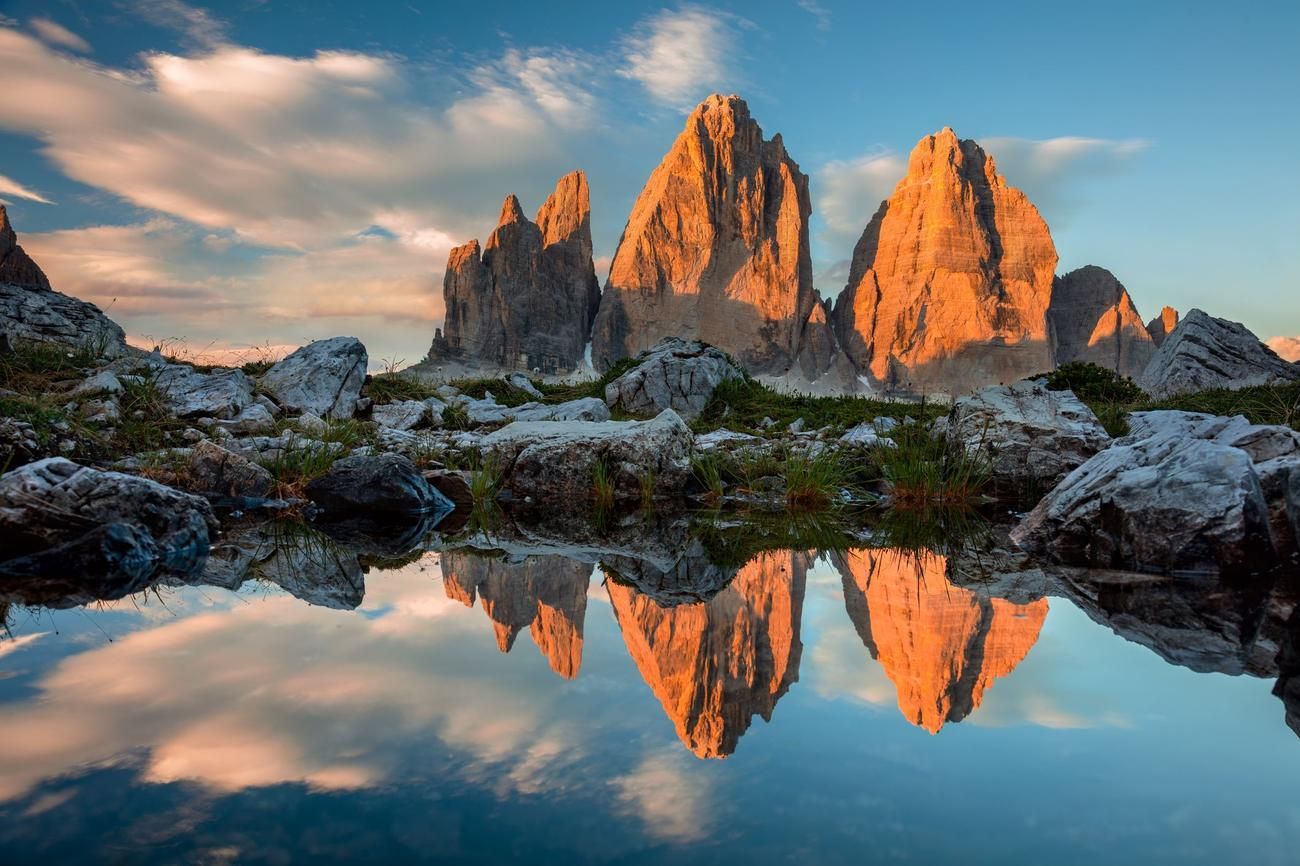
After a wait of more than a decade, the mountain that gave the Western imagination its gods has finally taken its place among UNESCO’s treasures. Rising to 2,918 metres above the Thessalian plain, Mount Olympus was, in Greek myth, the throne of Zeus and the twelve Olympians. Clouds gather and scatter around its summit with theatrical suddenness; gorges plunge toward the Aegean; rare orchids and golden eagles share slopes that have been left extraordinarily wild. This is a mixed inscription — honoured for nature and myth in equal measure — and it comes as recognition long overdue for the small mountain town of Litochoro, gateway to trails that have drawn poets, scientists and pilgrims alike for generations.
Where to Stay: Cavo Olympo Luxury Hotel & Spa, an adults-only retreat above Litochoro, offers dramatic views of Olympus itself paired with an unhurried, sea-view serenity.

🇩🇰 Bony Fish Fossils, Western Limfjord, Denmark
Fifty-five million years ago, the land that is now Denmark lay beneath a shallow, oxygen-starved sea — and in its still, dark waters, an entire lost world sank gently to rest. Along the pale cliffs of Hanklit and Knudeklint, on the islands of Mors and Fur in the Limfjord, that world has re-emerged with astonishing clarity: more than eighty species of ancient fish, sea turtles, birds and insects preserved in such fidelity that scientists can trace, layer by layer, one of the planet’s most dramatic ancient warming events. It is a place where deep time becomes tangible — where a walk along a windswept Jutland shoreline doubles as a walk through the dawn of the modern natural world. For the traveller who delights in landscapes with hidden depths, this quiet corner of Denmark rewards unhurried curiosity.
Where to Stay: The Radisson Blu Limfjord Hotel in Aalborg offers refined waterside comfort, with the fossil cliffs of Mors and Fur a scenic drive across the fjord.

🇵🇱 Gdynia Modernist City Centre, Poland
Some cities inherit their character across centuries. Gdynia invented itself in twenty years flat. Conjured almost from open fields in the 1920s and ’30s as newly independent Poland’s window to the sea, it became an extraordinary laboratory for modernist architecture and urban idealism — streamlined ocean-liner façades, generous public gardens, and a harbour designed with the same optimism as the buildings around it. As the city marks its centenary, UNESCO has recognised what locals have long known: that Gdynia is a rare, coherent vision of interwar modernity, built by a young nation determined to look resolutely forward. Pair it with genteel, spa-town Sopot just along the coast for a Baltic weekend of striking contrasts — utopian architecture and Belle Époque pleasure, side by side on the sand.
Where to Stay: The Relais & Châteaux Hotel Quadrille in Gdynia offers boutique elegance within the modernist district itself, while the grand Sofitel Grand Sopot nearby provides a beachfront alternative.

🇫🇮 Aalto Works, Finland
There is a particular kind of genius that hides in plain sight — in a door handle, a curved plywood chair, the fall of light through a clerestory window. This July, UNESCO recognised precisely that genius, inscribing thirteen buildings across Finland designed by Alvar Aalto together with his equally gifted collaborators and wives, Aino Marsio-Aalto and Elissa Aalto. From Helsinki’s Finlandia Hall, its white marble façade rippling like a frozen wave, to the red-brick poetry of Säynätsalo Town Hall rising from a forest clearing, these are buildings that were never meant merely to shelter — they were designed to dignify daily life. Five of the thirteen sites cluster in Helsinki itself, including the Aaltos’ own house and studio, making the city an unexpectedly rich architectural pilgrimage. To walk through these spaces is to understand a Nordic philosophy in which democracy, wellbeing and beauty were never separate ideas.
Where to Stay: The storied Hotel Kämp, in the heart of Helsinki, pairs Belle Époque grandeur with easy access to the Aalto House, Studio Aalto and Finlandia Hall — an elegant base for an architectural weekend.
Let Henrietta design your journey to Europe’s newest UNESCO treasures.
HAPPY TRAVELS